Saffron cultivation: corms, growing systems and spice quality
Indoor demonstrations in Kashmir and raised-bin trials in Umbria examine different ways to grow saffron, measure the harvested spice and study its genetic identity.
Published Jan 15, 2025
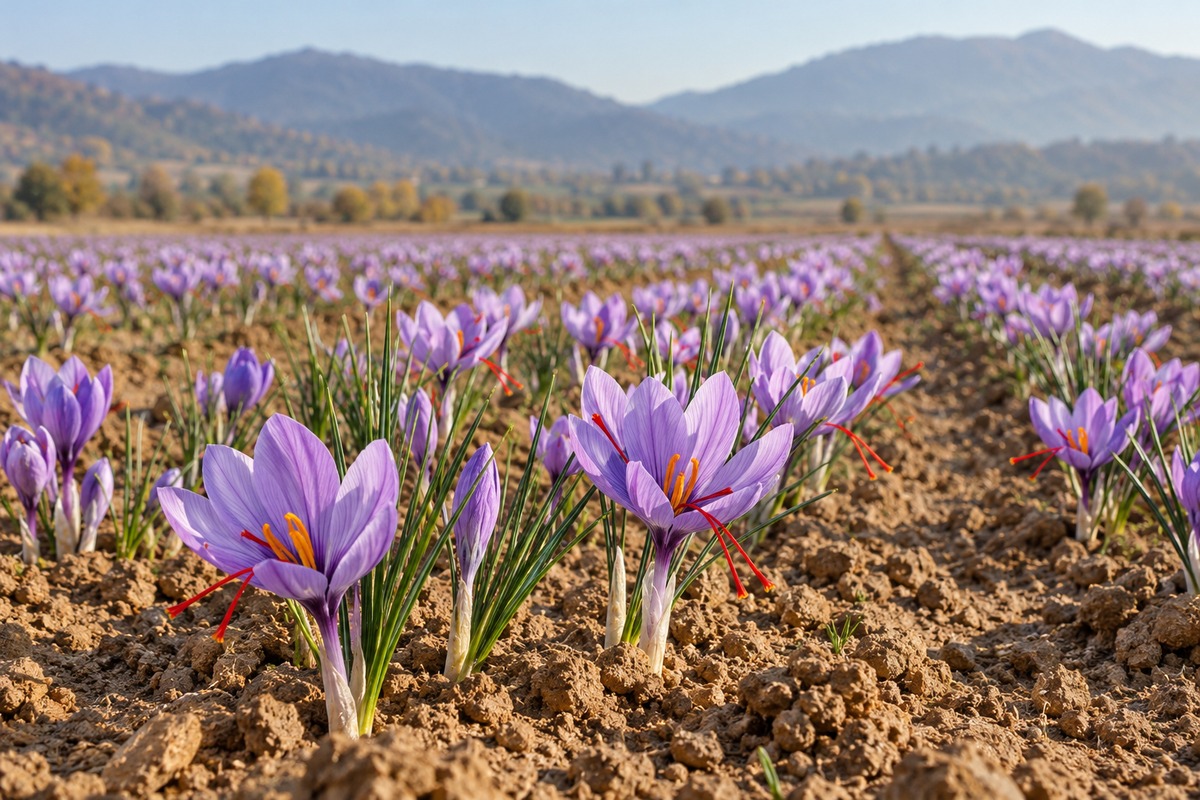
Saffron growers in Pampore, Kashmir, are testing different ways to produce the spice’s red stigmas. Some retain their established fields, while others have moved part of cultivation indoors. In January 2025, Nisar Ahmad Malik was still harvesting flowers from his ancestral land. Bashir Ilahi, at Sher-e-Kashmir University of Agricultural Sciences, was demonstrating cultivation in a controlled environment using tubes supplied with moisture and nutrients. He described encouraging results and considered environmental control a way to reduce the risk of crop failure.
Abdul Majeed, president of Kashmir’s Saffron Growers Association, supported the innovation; he and some other members had already grown the crop indoors for several years. Grower Manzoor Ahmad Mir called for wider government support. These developments form part of an expanding range of saffron cultivation methods. Alongside the demonstrations in India, a separate experiment in Umbria examined raised wooden containers, different growing media, harvested spice and the corms that provide planting material. The Italian work also investigated genetic markers as a possible basis for identifying saffron origins.
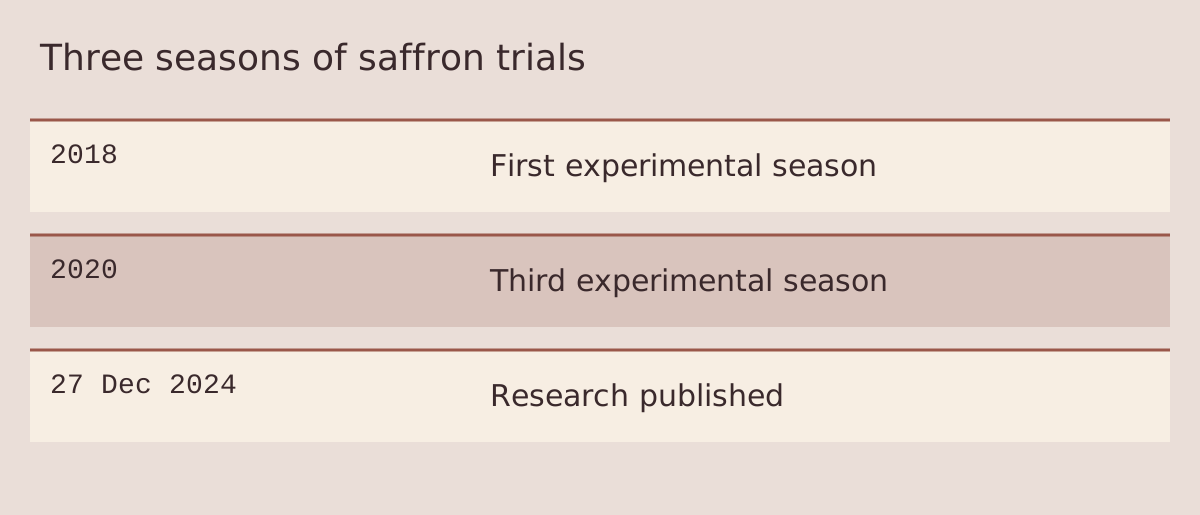
Illustration details
- Three seasons of saffron trials
- 2018
- First experimental season
- 2020
- Third experimental season
- 27 Dec 2024
- Research published
The corm carries the crop between seasons
Saffron, Crocus sativus, is a triploid plant propagated through corms. The spice consists of its dried stigmas, which must be separated from the flowers during a concentrated harvesting period. In the Italian seasonal cycle described by Alessandro Mariani and colleagues, growth extends from early autumn to late spring or early summer. Flowering takes place in October and November. During spring, the corms enlarge and reproduce before entering summer dormancy. Spice production and the development of planting material therefore occupy different parts of the same biological cycle.
Italian annual cultivation commonly involves lifting corms in summer, selecting them for size, checking for defects and replanting toward the end of the warm season. This creates repeated opportunities to inspect the planting material. It also requires annual planting operations and preparation of the growing area. Other cultivation systems leave corms in the ground for several years. The choice changes the sequence of work around the crop. The Umbria experiment used a fresh set of corms each year, so its results describe repeated annual cultivation rather than an uninterrupted multiyear stand.
Eight farms and three growing treatments
The University of Perugia team conducted its cultivation experiment from 2018 to 2020 on eight small saffron farms in seven areas of Perugia province, in central Italy. The farms included Alfonsi, Fontanelle, Mazzuoli, Porta Sole, Ro_Lo, Venturi, Vinerbi, and Zafferano and Dintorni. Their locations ranged from Marsciano and Perugia to Nocera Umbra and Gualdo Tadino. Comparing treatments across these farms allowed the researchers to examine cultivation changes alongside the variation between growing locations and between three successive seasons.
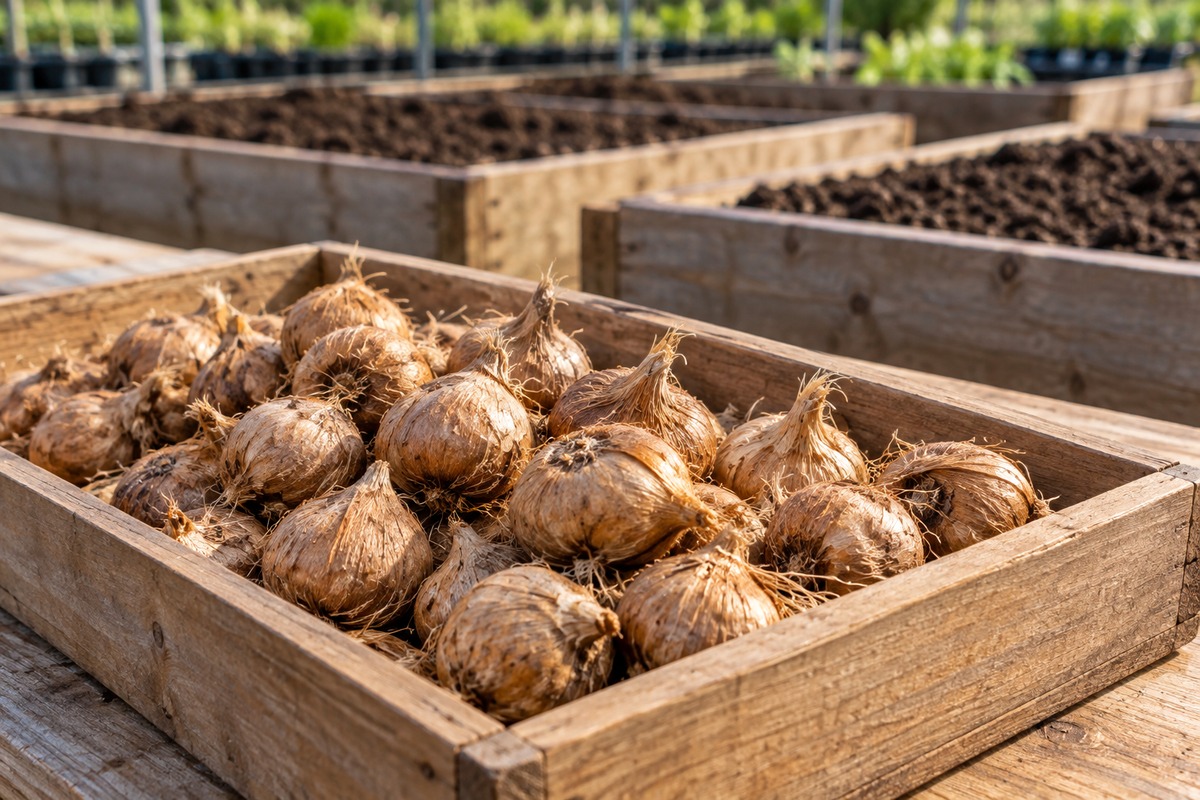
Three treatments formed the comparison: raised bins filled with local farm soil, raised bins filled with an organic-rich prepared medium, and conventional field plots. The treatments were repeated four times in a randomized complete block design. Planting material came from Mazzuoli farm and was selected for similar dimensions and weight, approximately 28 millimetres in diameter and 20 grams. The experimental design thus used comparable starting corms while varying their cultivation setting. It followed both the harvested spice and the corms produced by the plants over each growing season.
Raised containers change the working position
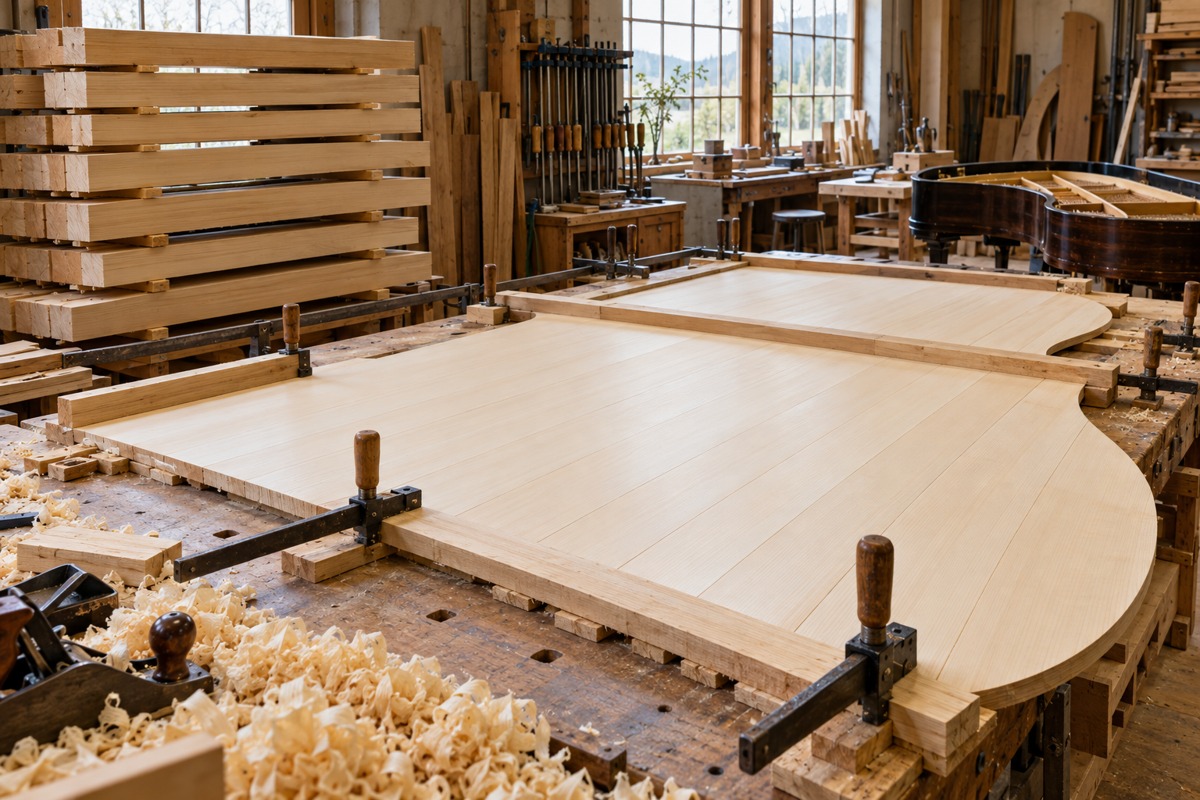
The bins were made from fir treated against decay and measured two metres long, 40 centimetres wide and 30 centimetres deep. Each contained a growing area of 0.8 square metres. Trestles raised them 70 centimetres above the ground. This arrangement allowed planting and flower picking from an upright position. The containers stood outdoors, so the experiment retained exposure to the local seasons. Its raised-bin method was a different cultivation arrangement from the indoor tubes being demonstrated in Kashmir, with different equipment and different environmental conditions.
The prepared medium contained 40 per cent fine Irish peat, 25 per cent silica sand, 25 per cent volcanic pumice and 10 per cent organic matter. Organic fertilizer was added at one kilogram per cubic metre. These proportions describe the experimental treatment. Local farm soils in the comparison were generally clay or loam and poorly drained. Saffron is sensitive to waterlogging, so the container treatment combined a change in growing position with a change in the root environment. The farm-soil bins provided a separate comparison for the effects of using the raised containers.
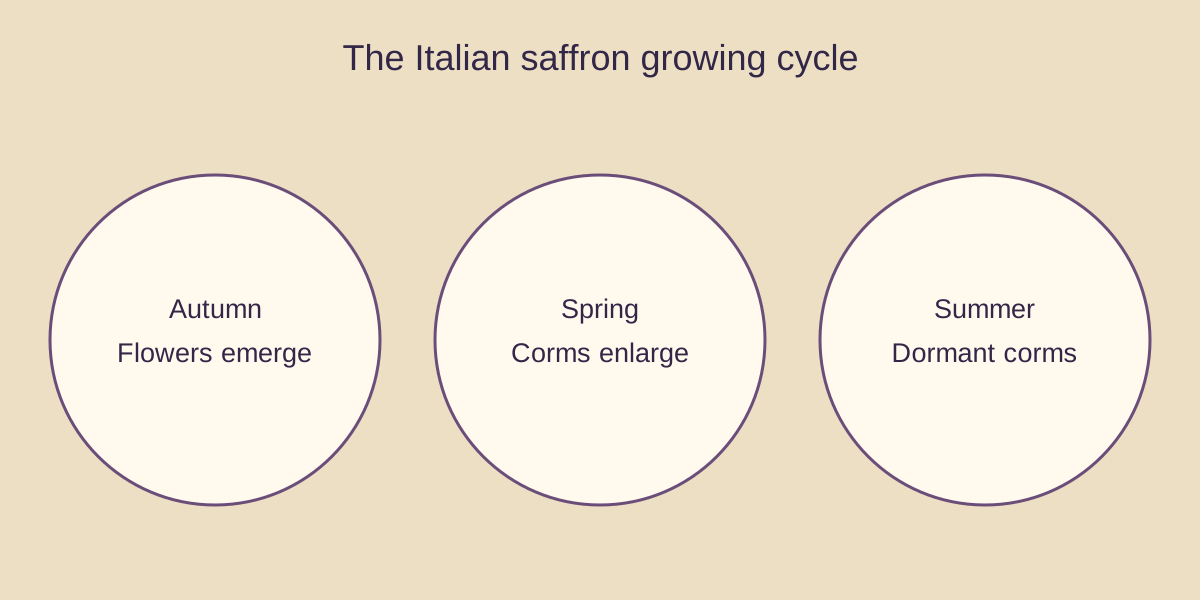
Illustration details
- The Italian saffron growing cycle
- Autumn
- Flowers emerge
- Spring
- Corms enlarge
- Summer
- Dormant corms
Spice yield differed between treatments
Mean spice yield was 1.377 grams per square metre in the prepared-medium bins, 1.150 grams in the farm-soil bins and 0.849 grams in the field control. The treatment means differed statistically in the combined analysis. The figures represent harvested spice per unit growing area across the experimental locations and seasons. They describe the performance of these particular treatments, starting material and cultivation conditions. The outdoor containers, the selected corms and the three-year period all form part of the comparison behind the numerical results.
Flowering lasted an average of 19.4 days in the prepared-medium bins and 18.2 days in the farm-soil bins, compared with 22.2 days in the field control. The bin treatments therefore produced their spice over a shorter average flowering period. Flower counts were also recorded, with means of 138.5, 121.9 and 126.2 flowers per square metre, respectively. The overall treatment effect on flower number was not statistically significant, even though the mean values differed. The analysis also detected interactions involving treatment, location and year, reflecting changes in how the treatments performed under different conditions.
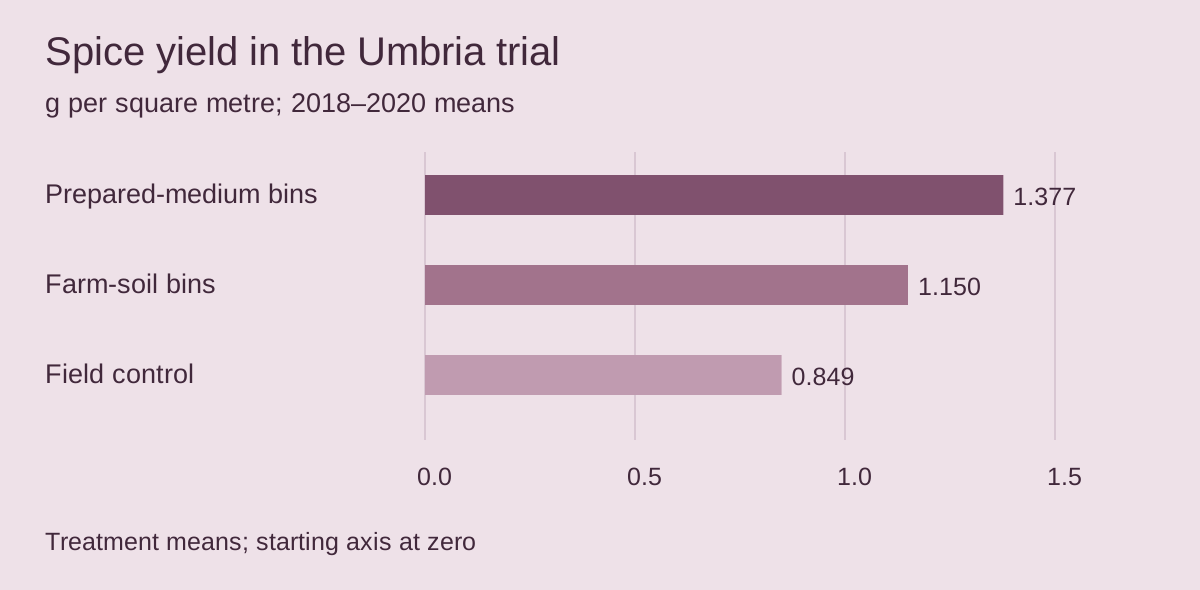
Illustration details
- Spice yield in the Umbria trial
- g per square metre; 2018–2020 means
- 0.0
- 0.5
- 1.0
- 1.5
- Prepared-medium bins
- 1.377
- Farm-soil bins
- 1.150
- Field control
- 0.849
- Treatment means; starting axis at zero
Seasons and locations remained part of the result
Across the treatments and locations, mean spice yield was 1.405 grams per square metre in 2018, 1.340 grams in 2019 and 0.632 grams in 2020. Flower numbers and corm characteristics also changed between years. Mariani and colleagues associated the seasonal differences with variations in rainfall and temperature. The annual figures cover the combined experiment; they are separate from the averages for each cultivation treatment. Keeping those two comparisons distinct preserves the difference between a change in growing method and a change between growing seasons.
The flowering period also varied between farms. Alfonsi averaged about 31.7 days, while Fontanelle averaged 12.6 days. These observations concern the duration over which flowers appeared at the respective sites. A longer flowering period spreads picking over more days, while daily flower production determines the work arriving on each of those days. The experiment recorded both the duration and the number of flowers. Its statistical analysis found that the response of flower numbers to the growing treatments differed among locations, alongside the broader differences between seasons.
Corm output is a separate measurement
At the end of the growing season, the researchers removed, cleaned, inspected, counted and weighed the corms. Their measures included both the number of corms and their total weight per square metre. The combined analysis found no statistically significant treatment difference in those two measures of total corm yield. Mean weight per individual corm did differ: the prepared-medium bins and field control produced similar values, both higher than the farm-soil bins. Total planting-material output and the average size of its individual units therefore describe different recorded characteristics.
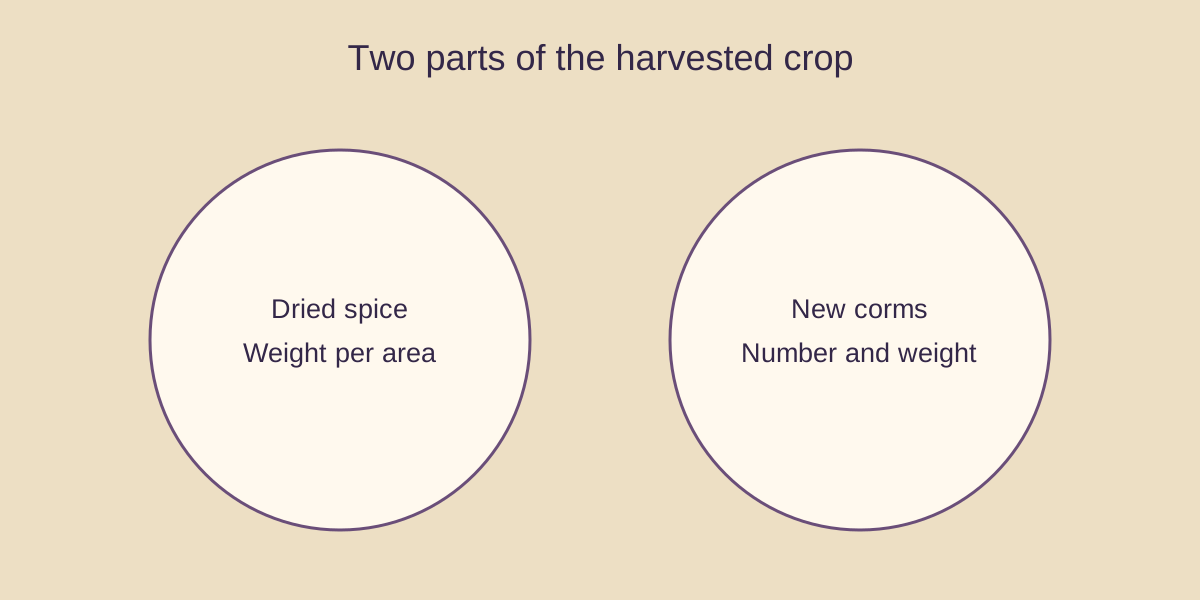
Illustration details
- Two parts of the harvested crop
- Dried spice
- Weight per area
- New corms
- Number and weight
Corm diameter was measured in a smaller part of the experiment, covering three locations and two years. Mean diameters were 35.1 millimetres in the prepared-medium bins, 33.7 millimetres in the field control and 31.1 millimetres in the farm-soil bins. The first two were significantly higher than the farm-soil result. These measurements have a narrower sampling scope than the complete spice-yield comparison. The corm data follow the plants beyond flower picking, recording the underground material that remains after the season’s stigma harvest has finished.
Daily harvesting and drying form one sequence
The experimental corms were planted at 70 per square metre in early September. Once flowering began in October, flowers were picked early every morning, counted and taken to the laboratory. The styles and stigmas were removed and dried promptly. This handling sequence joined field observations to the resulting spice sample: the researchers could record flower production while collecting the material needed for yield and quality measurements. The work remained concentrated around the flowering period, with repeated picking and separation operations as new flowers appeared.
In the trial’s drying procedure, the separated material spent three to five minutes at 80 degrees Celsius, followed by drying at 60 degrees until dehydration was complete. The daily spice output was placed in glass jars, closed hermetically and stored in darkness at room temperature. These were the experimental handling conditions used to prepare the samples. At the end of harvesting, spice from the four replicates of each treatment was combined for quality analysis because the quantity available from each individual replicate was limited.

Colour, aroma and bitterness were measured separately
The laboratory measured moisture, bitterness, aromatic strength and colouring strength. Spectrophotometric readings at 257, 330 and 440 nanometres were used for the indicators associated with picrocrocin, safranal and crocin, respectively. The analyses followed the study’s stated ISO 3632 procedures and were performed in duplicate. Each measurement described a different property of the dried spice. The sampling arrangement also mattered: quality analysis used bulked treatment samples, and the statistical work treated the data from different years as replications because of the limited spice quantities.
Mean moisture contents were 7.24 per cent for the prepared-medium bins, 7.55 per cent for the farm-soil bins and 7.56 per cent for the field control. The treatment difference in moisture was statistically significant, while the combined treatment effects on bitterness, aromatic strength and colouring strength were not. The authors placed the treatment means within the study’s top quality category. That classification concerned the samples and procedures examined in the experiment. It did not measure whether buyers preferred one treatment’s spice or establish a market premium for the raised-bin method.
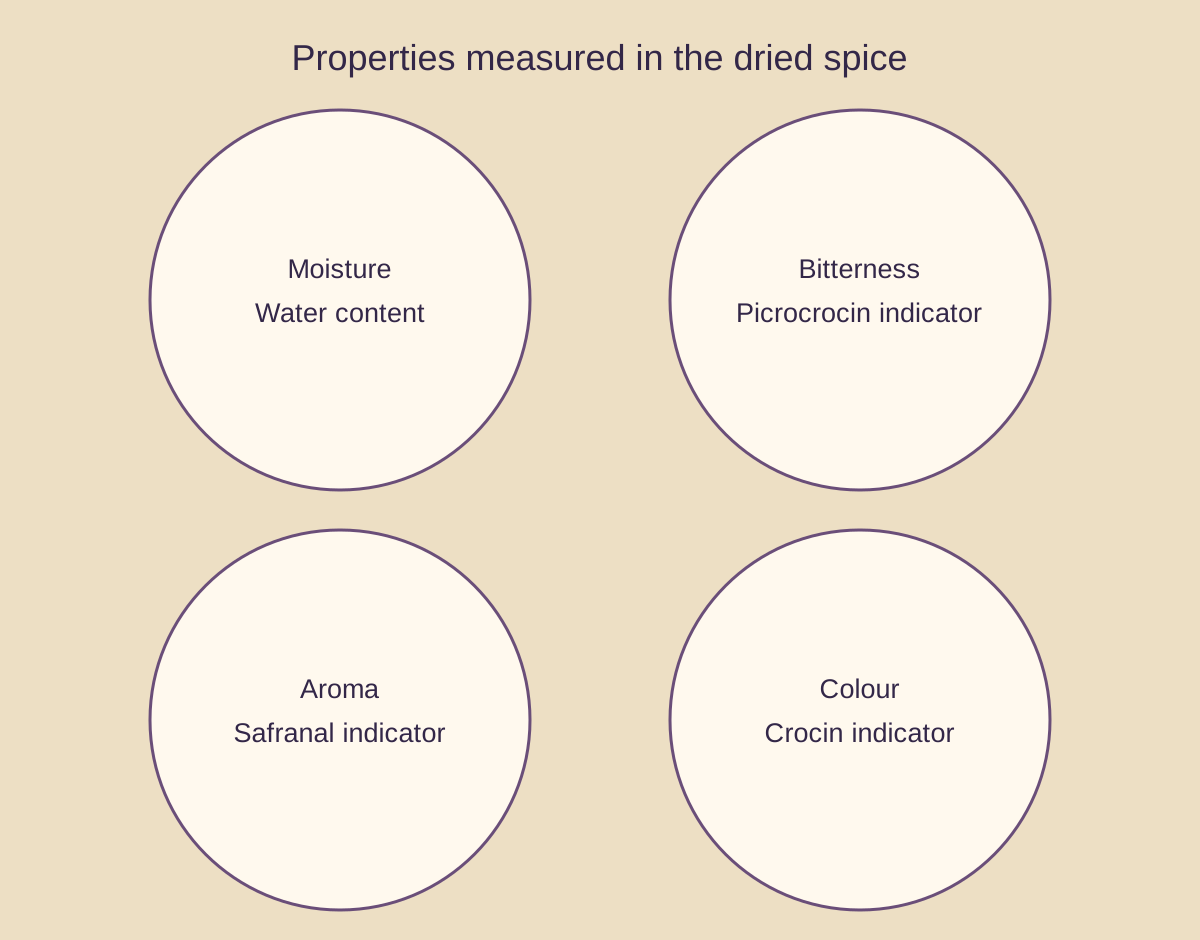
Illustration details
- Properties measured in the dried spice
- Moisture
- Water content
- Bitterness
- Picrocrocin indicator
- Aroma
- Safranal indicator
- Colour
- Crocin indicator
Harvest work and equipment costs
The raised working height was intended to ease planting and flower harvesting, two tasks that require substantial labour in saffron production. Mariani and colleagues considered the upright working position an operational advantage over repeated work close to ground level. During their three years of observations, they recorded no rodent damage to corms in the bins, while nearby field plantings experienced damage. These observations formed part of their assessment of the cultivation arrangement, alongside the measured yields and the changes in the flowering period.
The experiment did not include an in-depth profitability analysis. The bins require an initial investment and ongoing management, and their use changes the organization of planting and picking. The authors discussed potential labour savings and economic advantages, but did not establish a complete commercial return for the system. Their recorded outcomes included spice production, corm characteristics, quality measurements and field observations. Those outcomes describe the trial’s agricultural performance; the financial results of an individual farm would also depend on its own equipment, labour and selling arrangements.
Genetic identity adds another part of the crop
The same research team investigated genetic variation among saffron samples from different geographical origins. Plant material came from Italian sources and from the World Saffron and Crocus Collection at the Germplasm Bank of Cuenca, among other contributors. The analysis used leaf samples rather than the growing-bin substrate or a visual inspection of dried spice. DNA was extracted, checked and sequenced to identify differences at individual positions in the genetic material. Such differences, known as single-nucleotide polymorphisms or SNPs, provided markers for comparing the sampled accessions.
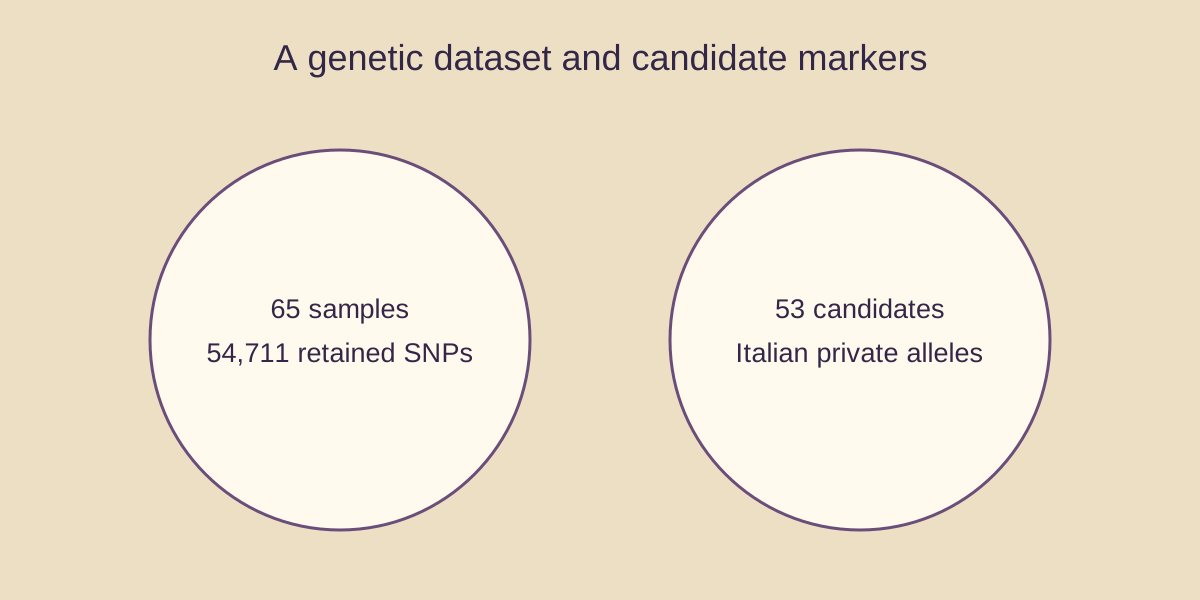
Illustration details
- A genetic dataset and candidate markers
- 65 samples
- 54,711 retained SNPs
- 53 candidates
- Italian private alleles
Initial processing produced 386,009 SNP variants from 65 samples. After filtering for missing information and allele frequency, 54,711 variants remained, with 7.3 per cent missing data. The filtering removed variants with more than 20 per cent missing data across samples and used a minor-allele-frequency threshold of 0.1 per cent. These steps defined the dataset used in the population comparisons. The retained variants were a selected set of genetic observations, rather than a count of distinct saffron varieties or a tally of geographical growing areas.
Shared genetics and candidate origin markers
The population analysis found low overall genetic differentiation. Pairwise differentiation values ranged from 0.004 to 0.021 across the eight geographical groups examined. Some collections showed clearer separation than others, while Italian and Spanish accessions overlapped in part of the analysis. This shared genetic background is consistent with a crop propagated through corms. The team nevertheless identified private alleles within the sampled groups: variants present in one group and absent from the others in the comparison. These provided a further way to investigate differences within the relatively similar material.
To select more frequent candidate markers, the researchers retained private alleles observed at least three times. This produced 53 candidates in the Italian accessions, alongside smaller sets in the other geographical groups. The authors noted that the larger Italian sample could contribute to its higher number of private alleles. They also called for additional accessions from other origins to validate the findings. The candidate markers therefore represent research toward traceability, with the scope defined by the tested collection and the need to examine a broader set of saffron material.
Different measurements follow different products
- Spice yield records dried harvested material per unit growing area.
- Corm counts and weights describe the planting material produced during the season.
- Quality measurements examine moisture and selected properties of the dried spice.
- Genetic markers compare sampled plant material and require validation for traceability applications.
Cultivation context: Reuters, republished by Business Standard, Kashmir’s saffron-growing demonstrations, Jan 15, 2025. Experimental detail adapted and paraphrased from Alessandro Mariani, Gianpiero Marconi, Nicoletta Ferradini, Marika Bocchini, Silvia Lorenzetti, Massimo Chiorri, Luigi Russi and Emidio Albertini, A Proposed Saffron Soilless Cultivation System for a Quality Spice as Certified by Genetic Traceability, published Dec 27, 2024, in Plants, volume 14. Licensed under CC BY 4.0. New explanatory wording and illustrations; no source figures reproduced.
Leave a comment